

Zinc oxide
2018-08-08
Introduction to Zinc Oxide Zinc oxide has three functions: firstly, it acts as an activator or accelerator in the formulation; secondly, it acts as an acid absorber, absorbing certain by-products of the vulcanization reaction, such as HCl, during the vulcanization of the rubber; and thirdly, it can improve the thermal properties of the rubber. Functions of Zinc Oxide: (1) Activation of the entire vulcanization system Zinc oxide and stearic acid together form zinc soap, which improves the solubility of zinc oxide in the rubber and forms a complex with the accelerator. This complex is particularly active and reacts with sulfur to produce a strong vulcanizing agent. (2) Improved crosslinking density Zinc oxide and stearic acid react
Zinc Oxide Introduction: Zinc oxide has three main functions: firstly, it acts as an activator or accelerator in the formulation; secondly, it acts as an acid absorber, absorbing certain byproducts of the vulcanization reaction, such as HCl, during the vulcanization of the rubber; and thirdly, it can improve the thermal properties of the rubber compound. Zinc Oxide Functions: (1) Activation of the entire vulcanization system: Zinc oxide and stearic acid together form zinc soap, which improves the solubility of zinc oxide in the rubber compound and forms a complex with the accelerator. This complex is particularly active and reacts with sulfur to produce a strong vulcanizing agent. (2) Improved crosslink density: The reaction of zinc oxide and stearic acid produces Zn2+ salts, which chelate with the sulfur-containing side groups of the rubber accelerator, stabilizing the weak bonds, altering the scission position of the sulfur bonds, resulting in shorter crosslinks in the vulcanized rubber, increasing new crosslinks, and improving the crosslink density. (3) Improved aging resistance of vulcanized rubber: During vulcanization and use, polysulfide bonds break, and the resulting H2S accelerates rubber degradation. Zinc oxide reacts with it to form new crosslinks, stabilizing the vulcanization network and improving aging resistance. The decomposition temperature of pure AC foaming agent is between 180-220℃ (the decomposition temperature varies depending on the manufacturer), which is relatively high for some products, so a foaming accelerator is needed. Zinc oxide is a commonly used foaming accelerator. The mechanism is that the outer electron arrangement of zinc ions has vacant orbitals, while the nitrogen and oxygen in the AC foaming agent molecule have lone pairs of electrons. The two coordinate and complex through acid-base coordination, causing the electron cloud density of the AC molecule -N-C- bond to flow to both sides, reducing the degree of overlap in the middle, leading to easy breakage of the -N-C- bond, thus activating and decomposing AC. In addition, the cyanic acid formed by the decomposition of the AC foaming agent easily forms a viscous and strong metal complex on the mold surface, shortening the demolding cycle, while zinc oxide can reduce scaling and prolong the demolding cycle. Also, zinc oxide can act as a UV blocker, but in actual production, only 0.2 parts of zinc oxide can reduce the AC decomposition temperature to around 150℃, and the actual effect is not strong. 1. Enhance the activity of vulcanization accelerators 2. Heat conduction effect. Enhance the thermal conductivity of rubber. 3. Reduce the decomposition temperature of the foaming agent, foaming aid.
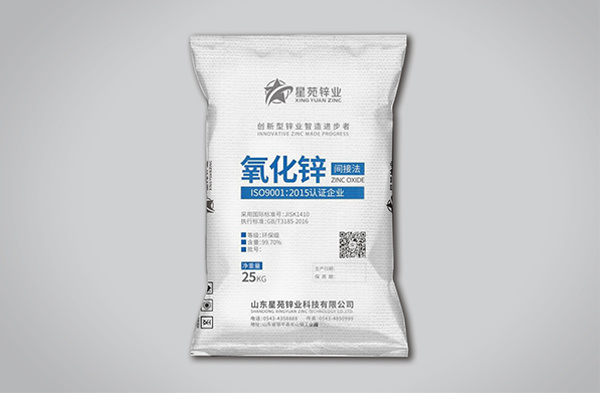
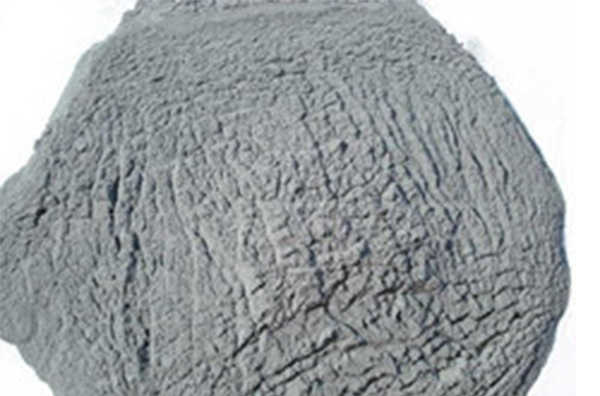
Xingyuan Zinc Technology CO., LTD.
Address: Shandong Zouping County Changshan Town Houhuai Village
General Manager:+8618763028888 (Sun Dongsheng)
Sales Department:+86-543-4358888
Fax:0543-4850999
E-mail:xingyuanchem@163.com
Website:www.sdxyxy.com


扫一扫查看官方网站