

What are the production methods for zinc oxide?
2020-08-04
Zinc oxide acts as an accelerator in tire manufacturing, speeding up the vulcanization process. Its usage rate in the formulation is approximately 1~5%. Tires containing zinc oxide exhibit relatively good thermal conductivity and heat capacity. This facilitates heat dissipation during vehicle operation, enhancing tire thermal stability and reducing heat buildup that can lead to poor heat dissipation, thereby extending tire lifespan and improving driving safety.
Zinc oxide acts as an accelerator in tire manufacturing, speeding up the vulcanization process. The amount used in the formulation is approximately 1~5%. Zinc oxide in tires has good thermal conductivity and heat capacity. During driving, it helps dissipate heat from the tire, enhancing thermal stability and reducing heat buildup, thus extending tire life and improving driving safety.
Zinc oxide is an important additive in the rubber and tire industry. It is also used as a vulcanizing agent, reinforcing agent, and coloring agent for artificial rubber, synthetic rubber, and latex. It plays a significant role in industrial production. So, how is zinc oxide produced?
Zinc oxide production methods are mainly divided into two categories: wet method and dry method.
1. Wet method: The wet method uses acid, alkali, or ammonium carbonate solutions to leach zinc oxide ore and zinc-containing dust materials. After purification, precipitation of basic zinc carbonate, drying, and calcination, zinc oxide is finally produced. Zinc oxide produced by the wet method is also known as active zinc oxide. The former Soviet Union, Germany, and Japan have all produced it, and some provinces and cities in China, such as Tianjin, Shanghai, Sichuan, and Guizhou, also produce it, but the output is very small and has not formed a large industrial scale.
2. Dry method: The dry method is divided into direct and indirect methods. The direct method involves roasting zinc sulfide concentrate, adding a carbonaceous reducing agent to form pellets, and then placing them in a reverberatory furnace. At high temperatures, zinc is reduced and immediately oxidized by CO2 and oxygen from the air in the furnace gas. After cooling, it enters the baghouse to obtain zinc oxide products. This method can also be used to process lower-grade zinc oxide ores or various zinc-containing residues, such as horizontal tank zinc slag and vertical tank zinc slag, to produce zinc oxide.
In addition to the two methods used in industrial production, there is also medical zinc oxide etc. These are also mostly produced using these two methods. Hopefully, this introduction has given you some understanding of zinc oxide production methods.
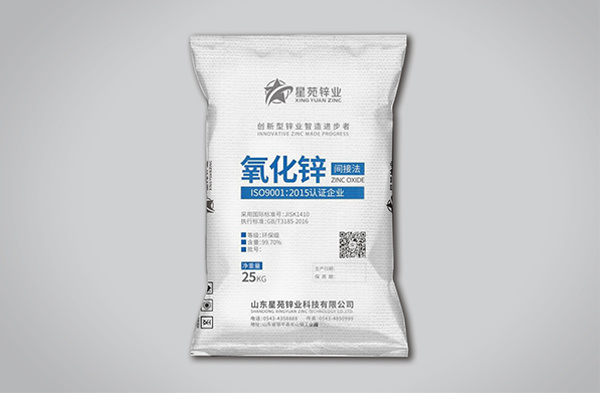
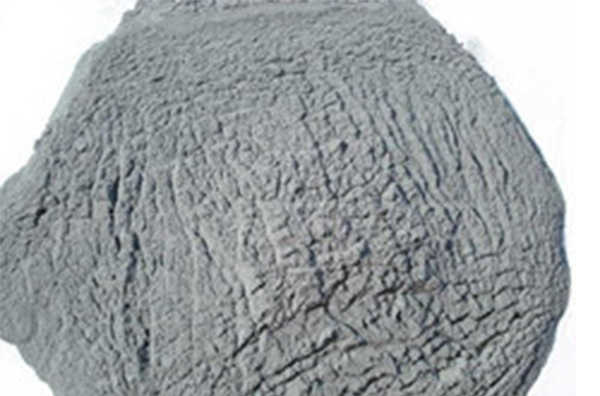
Xingyuan Zinc Technology CO., LTD.
Address: Shandong Zouping County Changshan Town Houhuai Village
General Manager:+8618763028888 (Sun Dongsheng)
Sales Department:+86-543-4358888
Fax:0543-4850999
E-mail:xingyuanchem@163.com
Website:www.sdxyxy.com


扫一扫查看官方网站