

Introduction to the characteristics of indirect zinc oxide method?
2022-12-26
The indirect zinc oxide industry has a promising future because it offers many benefits to businesses, making it very popular with customers. To help people better understand this, let's discuss the characteristics of indirect zinc oxide. Hopefully, this will be helpful.
The indirect zinc oxide industry has a promising future due to its numerous benefits for businesses, making it highly popular among customers. To enhance understanding, we will discuss the characteristics of indirect zinc oxide, hoping to provide assistance to a wider audience.
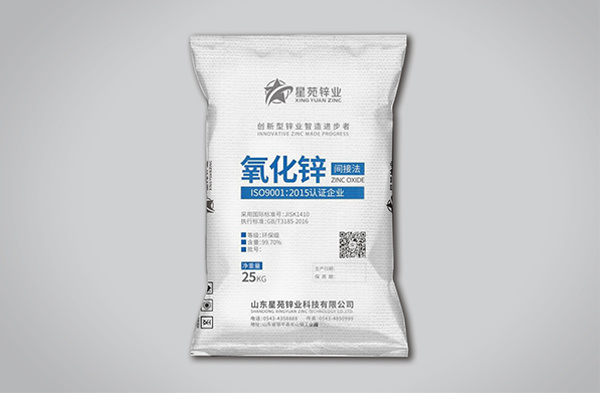
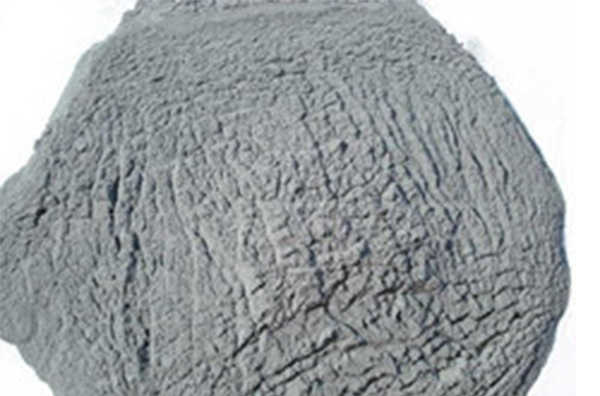
Many people remain unfamiliar with the basic information about indirect zinc oxide. Therefore, as a manufacturer, we find it necessary to provide a brief explanation. Indirect zinc oxide typically uses zinc ingots as raw materials. In a graphite crucible, at a high temperature of 1000℃, zinc transforms into zinc vapor, which is then oxidized by blowing in air to form zinc oxide, collected via a condenser. The purity of the zinc oxide varies depending on the zinc ingot raw material; the key technology is producing zinc oxide with a purity of 99.5%-99.7%. In addition to zinc ingots, zinc slag is also a key raw material. This product now boasts strong UV resistance and anti-aging properties. Indirect zinc oxide also possesses basic enzymatic and many unique functions, such as infrared sensing, ultraviolet resistance, and sterilization. Notably, it features small particle size, high purity, large specific surface area, and high chemical activity. Furthermore, this indirect zinc oxide easily disperses into the system, forming a relatively highly dispersed, uniform, and smooth dispersion.
Indirect zinc oxide has a small size and large specific surface area. Its surface bonds differ from those of particles, with incomplete outer molecular lone electron pairs, enhancing its surface active sites. This makes indirect zinc oxide far more selective than other traditional metal catalysts. Zinc oxide particles are excellent metal catalysts, especially when the particle size is less than 10nm, exhibiting significantly higher photocatalytic activity than general zinc oxide. Data information elements include particle size hazards. Current research indicates that the appearance directly affects the catalytic oxidation performance of ZnO through its specific surface area. The smaller the zinc oxide particle size, the narrower the particle size distribution, the lower the aggregation, and the higher the activity. Indirect zinc oxide generally uses zinc ingots as raw materials. The zinc ingots are converted into zinc vapor in a graphite crucible at a high temperature of 1000℃, then oxidized by injected air to form zinc oxide, and collected after cooling to obtain zinc oxide particles. Products from this company are widely used in rubber, ceramics, enamel, metallurgy, pesticides, magnetic materials, feed, glass medicine, permeation plating, catalysts, electronics, paints, dyeing, military industry, and coatings.
The above article introduces some relevant information about the characteristics of indirect zinc oxide. If you were previously unfamiliar with it, you can now take a look. The next installment will discuss related knowledge points. Remember to watch.
Xingyuan Zinc Technology CO., LTD.
Address: Shandong Zouping County Changshan Town Houhuai Village
General Manager:+8618763028888 (Sun Dongsheng)
Sales Department:+86-543-4358888
Fax:0543-4850999
E-mail:xingyuanchem@163.com
Website:www.sdxyxy.com


扫一扫查看官方网站