

Zinc oxide: A case study of contemporary computational solid-state chemistry research
2016-07-05
Abstract: Computational techniques have been extensively applied to the study of the chemical and physical properties of zinc oxide. Atomic-scale and density functional theory methods are used to investigate structural, thermodynamic, surface, and defect properties. This paper investigates the structure and energy of zinc oxide nanoparticles. While bulk properties have been extensively described from both fundamental and applied perspectives due to the physical and chemical properties of zinc oxide, here we focus on computational efforts. Polymorphism and physical properties: Over a wide range of temperatures and pressures, including ambient conditions, zinc oxide exhibits a wurtzite (B4) crystal structure (mineral zincite), with all atoms in tetrahedral coordination.
Abstract: Computational techniques have been extensively applied to the study of the chemical and physical properties of zinc oxide. Atomic-scale and density functional theory methods are used to investigate structural, thermodynamic, surface, and defect properties. This paper investigates the structure and energy of zinc oxide nanoparticles.
Bulk Properties
Since the physical and chemical properties of zinc oxide have been extensively described from both fundamental and applied perspectives, we will focus here primarily on computational efforts.
Polymorphism and Physical Properties
Over a wide range of temperatures and pressures, including ambient conditions, zinc oxide exhibits a wurtzite (B4) crystal structure (mineral zincite), with all atoms in tetrahedral coordination (see Figs. 1a and 1b). This AA′ structure can be visualized as a stack of electrically neutral sheets, each one atom thick, in which Zn and O atoms form a hexagonal honeycomb with three equivalent Zn–O bonds at each site. The corrugated structure, with all Zn atoms on one side and all O atoms on the other, is clearly seen in Fig. 1c. Zinc oxide is a strictly ionic crystal, each layer possessing a dipole moment normal to the surface; the parallel hexagonal layers or surfaces are bound together by Zn–O bonds on both sides, which is the main reason for the piezoelectric properties of ZnO materials.
An alternative stacking sequence AA′A′′ leads to the other well-known zinc blende structure (B3, see Figs. 1h and 1i), common to many binary semiconductor compounds. The zinc blende structure of zinc oxide was first revealed by Bragg and Darbyshire, who studied thin layers of ZnO on copper substrates. Surprisingly, their findings were only confirmed recently after the synthesis of zinc blende films.
Under pressure, zinc oxide undergoes a first-order phase transition to the rocksalt structure, with the coordination number increasing from four to six. Theoretically, at extremely high pressures, zinc oxide is predicted to transform into the CsCl (B2) structure with eightfold coordination, but this has not yet been observed.
Recently, periodic theoretical calculations have been used to predict that thinning of hexagonal layers in films leads to a hexagonal BN (graphite-like) structure of zinc oxide, with the Zn–O bonds between layers and the under-coordinated (three-coordinated) species disappearing. Furthermore, under pressure, the hexagonal layers can be stabilized at each point position, leading to an increase in the coordination number of Zn and O atoms to five (in three-coordinated species), which has been proposed as an intermediate metastable structure (HX) for nano-ZnO under tensile stress (Fig. 1, 1f and 1g) based on density functional theory and semi-classical simulation models. According to theoretical calculations, under pressure, zinc oxide may exist as a metastable intermediate body-centered tetragonal (BCT-4) structure (Fig. 1, 1j and 1k) with a coordination number of four, but this four-coordinated species is highly distorted. In addition, a fully microporous structure can be constructed, which is isotypic with known or hypothetical zeolite structures. In this structure, Zn and O ions would occupy the positions of the framework cations and anions, respectively, marking the Zn–O half-bond positions. These phases are only generated under negative pressure, which is achieved by template molecules inside the pores. The example we provide is similar to the calcite structure (cf. Fig. 1e and ref. 16), which has a structure that can accommodate other framework substances, and after discussion, it is found that this structural unit is a very stable zinc oxide particle structure.
We investigate the stability and properties of the observed and hypothetical ZnO polymorphs using energy minimization techniques based on interatomic potentials. Based on formal charges and polarizable dipole shells and parameters derived from short-range potentials proposed by Whitmore et al., mainly using room temperature data within a feasible time frame, we propose this model. Reparameterization work involving new experimental measurements of phonon dispersion and transition phase data is underway, but the current task is to find methods comparable in quality to and alternative to semi-classical methods (see, e.g., refs. 19 and 20). We note that the original interatomic interaction potential is modified by the short-range interaction between Zn ions, considering the low stability of the basic thermodynamic test phase, but this only slightly alters the calculated physical properties.
Figure 2 shows the calculated lattice enthalpies for the observed and hypothetical ZnO polymorphs as a function of pressure. Assuming a small enthalpy difference between the two phases, wurtzite is the most stable below the transition pressure of 8 GPa, while rocksalt is the most stable above the transition pressure (here calculated up to 30 GPa, not shown in the figure). Upon investigation across the entire pressure range, the wurtzite structure remains stable, or at least metastable, under the space group symmetry constraints, while the rocksalt structure collapses at a pressure of 3.7 GPa, as observed from the two degenerate imaginary phonon modes at the Γ point. Regarding the metastable structures, zinc blende is slightly lower than wurtzite, while the enthalpy of the thermodynamic test phase is closest to wurtzite at zero pressure, deviating from the value of wurtzite under pressure, and finally the enthalpy of CsCl is always high. Our calculations demonstrate that the hexagonal structure is unstable, and we find a typical model that corresponds to a buckled hexagonal layer. The overall stability of the wurtzite structure is responsible for the many important applications of ZnO. Tables 1 and 2 compare our calculated and experimentally observed properties of zinc oxide at low temperatures and under pressure. The validity of the semi-classical model determined by this protocol, which we used to investigate point defects, surface morphology, catalysis, and the ZnO nanostructures, is summarized here. Our studies on the effect of temperature on the calculated physical properties will be reported elsewhere.
Point Defects
Zinc oxide is widely used in catalysis, electronics, optoelectronics, and pharmaceuticals, and the versatility of this material is largely due to its defect properties. However, the nature of intrinsic defects in zinc oxide is still poorly understood, and to date, there is no clear experimental data to classify the types of defects in zinc oxide. Theoretical work is a necessary complement to the analysis of a large amount of experimental data. The first periodic calculations were performed by Kohan et al. using modern electronic structure techniques, and numerous subsequent works have been carried out. Simple static embedding methods have been performed by Fink, whose main focus has been on bulk and surface vacancies in zinc oxide.
Initially, we investigated intrinsic point defects in zinc oxide, and later, H, N, P, Li, Fe, Cu, and Al impurity centers were studied separately. The study of atomic electronic structure and defect formation energies was mainly aimed at investigating the dominant oxidation states of defects obtained using the embedded cluster method, which combines quantum mechanics and molecular mechanics to achieve the purpose of local region treatment of ionic solids. In contrast, many recent periodic density functional calculations, for quantum mechanical treatment, we choose to use the method of hybrid exchange-correlation functionals, limiting the chemical accuracy in the energy of defect formation. In particular, in this aspect of the work, we have adopted the b97-1 exchange and correlation functional. In comparison, we also calculated the defect formation energy using the classical Mott-Littleton method
Using the Born-Haber cycle to obtain the data in Table 3, the predicted energies are summarized. The figure shows that the formation energy of the Frenkel pair of O is lower; moreover, we also found that among all the ions forming internal defects, the energy of O vacancies is the lowest, which means their superiority under oxidizing conditions. However, both Zn vacancies (2.2 eV) and O vacancies (1.7 eV) have relatively small formation energies. Therefore, we believe that the dominant type of defect material depends on the background and working conditions of the sample.
We further considered the intrinsic mechanism of charge compensation in zinc oxide. It turns out that Zn and O have the lowest formation energy when they form Schottky defects in their normal valence states; however, it is still very high for the observed defect concentration in actual samples. Therefore, when we simulate zinc-oxygen dimer vacancies, as we predicted, the energy between the two defects increases significantly due to Coulombic interaction. The Mott-Littleton calculation regions of 4.01 and 3.97 eV may have two orientations, respectively inside and outside the hexagonal layer.
The ions closest to the former produce a regular prism (cations and anions form equilateral triangles), and the bond length (3.17 Å) is fixed in a layered separation form. In contrast, the anions of other vacancies form isosceles triangles, as indicated in Figure 3d (upper angles are 59.73 and 56.37 respectively), and they will twist towards the axis of the prism, forming an irregular octahedron, as shown in Figure 3e. The Zn-O bond length stretches from 3.17 Å to 3.94 Å, while the Zn-Zn bond length in the first structure is 3.88 Å, and that in the second structure is 4.02 Å, and the O-O bonds are 3.42 Å and 3.44 Å respectively. It seems that this vacancy is larger for a more stable structure. 3.79 eV is the lowest formation energy value of the internal defects of ZnO calculated by us. This calculation result shows that the observed defect concentration cannot be completely explained by assuming only intrinsic mechanisms. We will also demonstrate that the presence of the surface plays a key role when defects are introduced into the material.
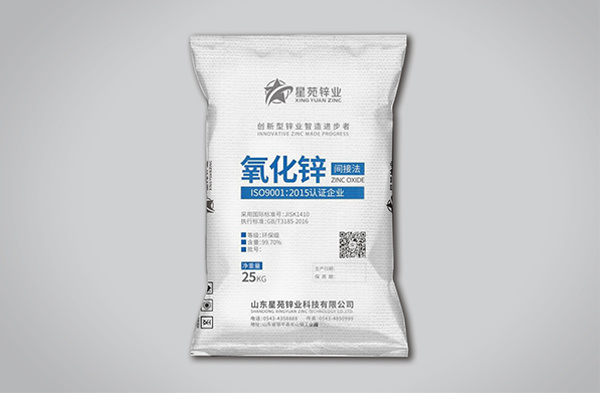
Xingyuan Zinc Technology CO., LTD.
Address: Shandong Zouping County Changshan Town Houhuai Village
General Manager:+8618763028888 (Sun Dongsheng)
Sales Department:+86-543-4358888
Fax:0543-4850999
E-mail:xingyuanchem@163.com
Website:www.sdxyxy.com


扫一扫查看官方网站