

Analysis of Marketing Models of Domestic Chemical Enterprises
2016-06-01
With the continuous high-speed development of China's economy, the development of domestic chemical enterprises has also entered the fast lane, from the original weakness to strength, and gradually integrated with the international chemical market. Whether it is production technology, production capacity, product quality or independent intellectual property rights, it has been greatly improved and developed. The construction of new projects is booming. This has led to the rapid saturation of the domestic chemical market, and the sales of chemical products have experienced a process from no worries about sales to unsalable products. In the process of extremely fierce market competition, chemical enterprises are faced with the problem of how to win in competition and how to survive in competition. Therefore, domestic
With China's continuous and rapid economic development, the development of domestic chemical enterprises has also entered the fast lane, growing from weak to strong, and gradually integrating with the international chemical market.
Whether it is production technology, production capacity, product quality, or independent intellectual property rights, significant improvements and development have been achieved. New projects are being constructed rapidly. This has led to rapid saturation of the domestic chemical market, and chemical product sales have gone from being easily sold to unsold. In the face of fierce market competition, chemical enterprises are faced with the challenge of how their products can win in competition and how the enterprises themselves can survive.
Therefore, domestic chemical enterprises are paying increasing attention to the issue of brand marketing strategies for chemical products. In the tide of the market economy, the role of marketing in the operation and development of an enterprise has become increasingly apparent. A marketing strategic thinking suitable for the development of the enterprise can help the enterprise thrive and lead it to success. In recent years, although marketing strategies and innovative thinking have been constantly evolving, and have reflected new insights into marketing issues from different aspects, due to the particularity of the chemical product market, chemical enterprises have been exploring marketing strategies and thinking suitable for the chemical industry in practice.
Economic Situation of the Domestic Chemical Industry
Compared with international chemical giants, Chinese chemical enterprises appear very small. According to statistics, in 2004, the average annual sales of domestic chemical enterprises were around 100 million yuan, although this shows a high growth rate compared to 95 million yuan in 2003 and 81.7 million yuan in 2002, the number of enterprises is excessive, and production capacity is widely dispersed.
In terms of regional distribution, the mainstream chemical enterprises in China are mainly located in the East China region, accounting for 42.9% of the total number of chemical enterprises. There are a total of four provinces with more than 1,000 chemical enterprises. In terms of products, the mainstream products of domestic chemical enterprises are rubber products, chemical fertilizers, chemical reagents, auxiliaries, synthetic materials, and coatings. The total number of manufacturers of these five categories of products accounts for 47.6% of the total number of chemical enterprises in China.
Based on the above analysis, the general characteristics of domestic chemical enterprises are as follows:
1. The dispersed production capacity leads to a lack of leading enterprises in the industry, and most enterprises are unable to establish complete sales channels or lack effective control over channels.
2. The uneven regional distribution means that most production enterprises must cross regional boundaries to sell products to downstream purchasers. In this process, the role of channels is crucial.
3. The concentration of product categories leads to fierce competition in the above-mentioned product areas, and the weak product differentiation makes price the focus of enterprise competition.
In response to the above-mentioned current situations of domestic chemical enterprises, seven effective measures will be listed below:
Chemical Enterprise Marketing Strategies
I. Chemical Product Quality is the Guarantee of Brand Marketing Strategy
Product quality is the guarantee of an enterprise's survival and the soul of a brand. Brand products must first be based on high quality, because the establishment, protection, and development of a brand ultimately depend on customer trust and positive feedback on product quality. It should be noted that the quality of chemical products cannot remain at the level of general quality standards, but should start from market demand and deeply understand customer quality requirements. The quality of chemical products is mainly measured by the following three scales: (1) meeting national standards; (2) the lasting stability of product quality; (3) the service of product sales. Quality is the starting point of brand value and dignity. Without first-class quality, attempting to establish a brand is like building a building on sand, especially in today's fiercely competitive buyer's market.
II. Improvement of Production Technology is the Core of Brand Marketing Strategy
The essence of competition among chemical enterprises is the competition of production technology and independent intellectual property rights. Leading production technology represents improved product quality and reduced production costs. The result of fierce competition in the current domestic chemical market is that prices are getting closer to costs, and profit margins are getting smaller. Enterprises with backward technology, poor quality, and high production costs are destined to be eliminated, while enterprises with advanced technology, high quality, and low costs will win in this cruel competition. For example, Henan Zhongyuan Dahua Group introduced advanced high-pressure production technology from Italy's Ouchi Technology Company and successively built three sets of melamine projects with a total capacity of 60,000 tons, making the company the largest melamine producer in China. With its stable quality and low production costs, it firmly grasped the initiative in market competition and successfully occupied both domestic and international markets.
III. Optimization and Adjustment of Product Structure and R&D of Independent Intellectual Property Rights are the Driving Force of Brand Marketing Strategy
Chemical enterprises actively optimize and adjust their product structure and develop independent intellectual property rights according to market demand, effectively ensuring the sustained and stable development of the enterprise. This is also the key to the enterprise's success in market competition. Based on the original single production of chemical fertilizers, Henan Zhongyuan Dahua Group utilized the production advantages of synthetic ammonia and urea to actively develop downstream chemical products. It successively developed and constructed projects such as hydrogen peroxide, melamine, compound fertilizers, and coal chemical industry, avoiding the risks brought by single products in market competition and achieving good economic benefits. The company has also been committed to the research and development of independent intellectual property rights. On August 16, 2004, the independently developed industrial production technology of melamine foam plastic resin and the industrial production technology of melamine foam plastic successfully passed the results appraisal organized by the Beijing Municipal Science and Technology Commission. This product has a wide range of applications (such as building materials, transportation tools, aerospace, electronic information, household appliances, etc.) and broad market prospects. At the same time, it is a high value-added, high-tech product that fills a domestic gap and makes it the only enterprise in China with melamine foam plastic production technology. The successful research and development of this technology has injected new vitality into Zhongyuan Dahua Group and enhanced its immunity in market competition.
IV. The Establishment of a Sales Network for Chemical Products is the Basis of Brand Marketing Strategy
In the sales process of chemical products, chemical enterprises should establish their main target markets and customer groups, concentrate their efforts, create model markets, establish sales market bases, and build a complete sales network with the base as the center. This is a crucial process that chemical enterprises must go through and complete. The initial establishment of a base can be a prefecture-level market, a provincial market, or one or several large customers. Through these target markets and customers, influence and penetrate other peripheral markets and customers, gradually establishing a complete sales network. A solid network construction is not only the basis of brand marketing strategy but also the foundation for chemical enterprises to achieve ultimate and comprehensive victory.
V. Publicity is an Important Means of Brand Marketing Strategy
For a brand to become widely known, it must be promoted, and this is no exception for chemical product brands. The growth of a chemical product brand is not only a process of the company's continuous growth in strength, but also a process of increasing brand promotion efforts. However, brand promotion for chemical products differs from that of traditional consumer goods. The latter can produce immediate results, while the former, because it only involves professional groups and specific industries, requires a more targeted promotional strategy; otherwise, it will only be counterproductive. The main brand promotion strategies for chemical products include the following: 1. Participating in influential industry exhibitions. 2. Inviting customers to visit the company's advanced production base and management methods. 3. Building a good reputation among customers. 4. Maintaining good relationships with industry associations, industry media, and reporters. 5. Promoting the company's brand through television, newspapers, and the internet.
VI. Sales service is the guarantee of brand marketing strategy
The quality of sales service directly affects the brand's position in the minds of customers. Sales service is divided into three stages: pre-sales, in-sales, and after-sales. Pre-sales includes the implementation and filing of customer requirements for various product indicators, sample mailing and testing, and transportation arrangements. In-sales includes the protection of products and time guarantees during transportation; after-sales includes customer return visits, exchanges of unqualified products, and assistance in solving technical problems during production; Huawang enterprises should establish good customer relationships with good sales service.
Customers may encounter different problems in the use of chemical products due to differences in their production processes, equipment, and technical levels. For these problems, the manufacturing enterprise should actively cooperate and send engineering and technical personnel to help customers find and solve problems. This is also a good opportunity for the enterprise to establish its own responsible image and develop customer relationships. For example, at the beginning of the market launch of melamine products by Henan Zhongyuan Dahua Group, a well-known board material company in Shenzhen encountered problems such as fast reaction speed and poor control of the production process. Zhongyuan Dahua sent production and analysis technicians to Shenzhen. After analysis and testing, and ensuring that there were no quality problems with the company's products, they actively analyzed and investigated the problem with the customer, and finally found that there was an error in the parameter setting. After this incident, the customer not only expressed great gratitude to the company but also established a deep friendship and long-term cooperation with the company. At the same time, this customer became a promoter of the company's products, bringing good reputation to the company in the board material industry.
VII. Brand protection is the foundation of brand marketing strategy
The quality of brand protection is related to the survival of an enterprise, especially the preemptive registration of trademarks can bring fatal blows to the enterprise. Therefore, strengthening the management of trademarks is an effective legal protection for brands. Chemical products have homogeneity and are easy to be counterfeited and infringed. Special attention should be paid to the use and protection of trademarks during domestic and international sales. If a brand
has been recognized and praised by domestic and foreign counterparts through hard work, but the trademark is preemptively registered by other companies abroad, it will seriously affect the sales of the company's products in the international market. Chemical enterprises
should actively register trademarks in the countries where the products are sold and potential markets at the beginning of brand creation or participate in international agreements to protect trademarks and brands. For example, Henan Zhongyuan Dahua Group signed the Madrid Agreement and Protocol before the production of melamine, obtaining trademark protection in 64 countries. It also actively implemented a famous brand strategy domestically, and its trademarks and products have won the title of China's Famous Trademark, China's Famous Brand Product, and National Exempt Inspection Product, providing a favorable guarantee for the sustainable and stable development of the company's brand marketing strategy.
In response to the above seven marketing strategies, domestic chemical enterprises are also gradually implementing several new marketing models:
New marketing models for chemical enterprises
1. Relational marketing
Relational marketing refers to the extension of marketing activities to before, during, and after product sales, strengthening contact with consumers at all levels, cultivating relationships with consumers, and trying to provide consumers with more value than functional benefits. On the one hand, enterprises should interact with consumers to gain a deeper understanding of customers and the market; on the other hand, enterprises also allow consumers to feel the brand's charm and improve brand loyalty during the interaction. Relational marketing requires enterprises to engage in interactive activities with consumers on three aspects of benefits. These benefits include traditional functional benefits, process benefits, and relational benefits. Functional benefits refer to the product and its performance characteristics, quality, price, etc. Marketers should start from the needs of consumers and fully adopt consumers' opinions in product development, pricing, and promotional communication. Process benefits refer to the benefits consumers enjoy throughout the process, from considering purchasing a product, to actually purchasing it, to consumption, to after-sales service, and to repeat purchases. Relational benefits refer to the benefits consumers enjoy by establishing a long-term and stable relationship with the enterprise. This includes consumers' long-term good product experience, the additional value brought to consumers by the enterprise's personalized service, the benefits consumers obtain by sharing information with the enterprise, and the benefits brought to consumers by different loyalty levels, etc. Only in this way can customers and enterprises be connected together, reducing the possibility of customer loss.
2. Network marketing
In the e-commerce era, whether it is a small business owner or the CEO of a large company, they must strengthen the company's e-commerce. Open e-commerce platforms for horizontal price comparison will give advantageous enterprises greater advantages, and the horizontal integration of industries will be further promoted. This promotion is faster than existing market factors. Network marketing strategy is a strategic idea for enterprises to carry out marketing activities using modern information network resources. It is a new marketing concept and business model in the digital economy era. It is not restricted by time and place, providing 24-hour global marketing services; it is rich in text and images, directly showing the prototype of goods to users all over the world; the amount and accuracy of information storage and transmission on the network far exceed other media. At the same time, network marketing can timely adapt to changes in market demand, which is conducive to enterprises adjusting their advantages and updating products, and is a powerful tool for enterprises to communicate with their partners. Since network marketing uses information technology to conduct all marketing activities, it makes it easier for enterprises to open up vast markets, greatly reducing transaction costs, which is only about 1/10 of traditional marketing costs, giving enterprises a greater advantage in cost competition. The advantages of network marketing strategy also lie in the fact that enterprises integrate various marketing activities such as product descriptions, customer opinions, advertising, public relations, and customer service, making it easier to conduct one-to-one two-way interactive communication, truly achieving the comprehensive effect pursued by personalized and targeted services.
3. Green marketing
Some people say that "green" will be the mainstream color of the 21st century, and green products will be the leading products of the 21st century. For example, a large domestic natural gas processing plant first invested heavily in developing green resources, researching and developing green products, establishing green brands, and establishing green marketing concepts to guide green consumption. The natural gas processing plant has developed more than 100 kinds of fine chemical products using its own advantages, all of which have passed ISO 9002 quality system certification. The R600a it produces can effectively replace Freon as a refrigerant, filling a national gap and achieving the theme of green environmental protection. Several other products have been rated as high-tech products. Based on its own product characteristics, the natural gas processing plant has held various activities to strengthen its contact with customers. Taking the popular green consumption of the 21st century as an opportunity, it transforms the high-quality and low-energy-consuming products in the customer's impression into high-tech green products, using "green" as a trump card for the enterprise to develop and occupy the market.
4. Cultural marketing
Corporate culture is a core competitive advantage for enterprises and has a crucial impact on their business performance. When enterprises enter markets in other regions, the first challenge they may encounter is cultural differences. However, a strong corporate image can help gain recognition from target customers. A strong corporate culture not only improves employees' moral standards but also enhances the overall image of the enterprise. Excellent performance in the sales work of chemical enterprises is inseparable from the establishment of corporate culture. This factory possesses a good corporate culture, with the tenet of "cultivating and shaping people with excellent culture" and the goal of "producing high-quality refined oil and gas products and creating internationally renowned brands." Its "Hualida" series of chemical products are renowned at home and abroad for their excellent quality and service, establishing a world-class corporate image and laying a solid foundation for the sustainable development of the enterprise.
下一条:
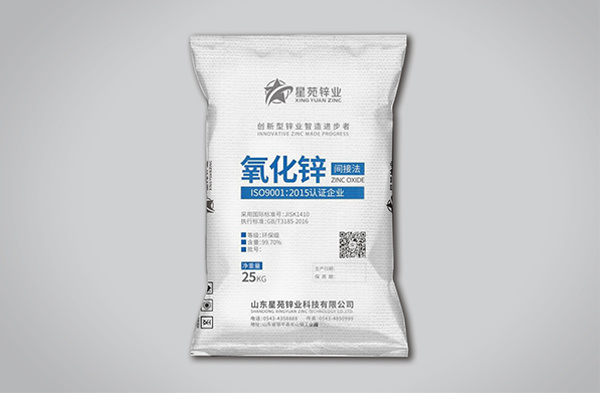
Xingyuan Zinc Technology CO., LTD.
Address: Shandong Zouping County Changshan Town Houhuai Village
General Manager:+8618763028888 (Sun Dongsheng)
Sales Department:+86-543-4358888
Fax:0543-4850999
E-mail:xingyuanchem@163.com
Website:www.sdxyxy.com


扫一扫查看官方网站