

Why can nano zinc oxide replace ordinary zinc oxide?
2021-07-07
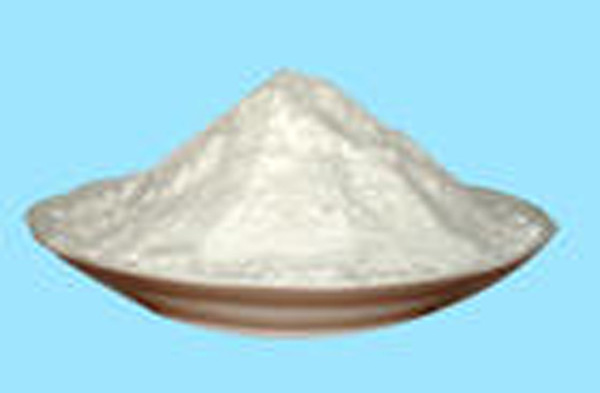
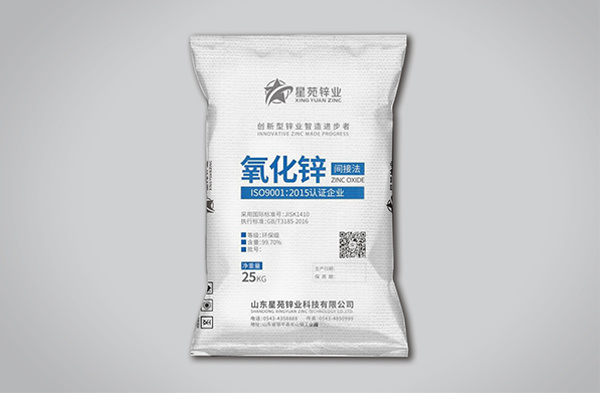
Compared with traditional zinc oxide products, nano zinc oxide has a larger specific surface area and higher chemical activity. It also possesses a series of unique properties such as antibacterial and bacteriostatic effects, deodorization, and enzyme prevention. Nano zinc oxide offers a higher cost-performance ratio than ordinary zinc oxide and has a wider range of applications. Today, the editor of Shandong Xingyuan Zinc Industry Technology Co., Ltd. will analyze why nano zinc oxide can replace ordinary zinc oxide in various industrial productions.
Compared with traditional zinc oxide products, nano Zinc oxide It has a large specific surface area and high chemical activity. At the same time, it also has a series of unique properties such as antibacterial, bacteriostatic, deodorizing, and anti-enzyme properties. Nano zinc oxide has a higher cost-effectiveness ratio than ordinary zinc oxide, and its uses are also wider. Today, the editor of Shandong Xingyuan Zinc Industry Technology Co., Ltd. will analyze for you why nano zinc oxide can replace ordinary zinc oxide in various industrial productions?
1. Ceramic Industry
Using nano zinc oxide instead of ordinary zinc oxide in the ceramic industry can reduce the ceramic sintering temperature by 400~600℃, effectively reducing energy consumption. In addition, due to the use of nano zinc oxide, ceramic products have a bright appearance, dense texture, excellent performance, and new functions such as antibacterial and deodorization.
2. Coatings Industry
In the coatings industry, the amount of nano zinc oxide used is 1/3 less than that of ordinary zinc oxide. However, the various performance indicators of the coatings have been greatly improved. For example, the use of nano zinc oxide powder in exterior wall coatings has increased the scrub resistance of the coatings by 8 times.
Ship-specific coatings made using nano zinc oxide as a raw material can not only shield ultraviolet rays but also kill various microorganisms, thereby increasing sailing speed and extending maintenance cycles.
Using nano zinc oxide in latex paint can enhance the latex paint's resistance to ultraviolet radiation, reduce the sensitivity of the latex paint in humid environments, and improve its aging resistance.
3. Functional Plastics
Dispersing nano zinc oxide in a resin matrix to form a resin-based nanocomposite material. Due to the nano-size effect, surface effect, and strong interfacial bonding of the dispersed phase, nano Zinc oxide plastics have excellent properties not possessed by general engineering plastics. The resulting nano plastic films have a dense microstructure, which can inhibit the dissolution and diffusion of molecules, improving the barrier properties of the film and enabling applications in gas separation, information-optical materials, and sensing.
4. Environmental Protection Industry
When nano zinc oxide is irradiated with photons with energy greater than the band gap, electron-hole pairs are generated. The holes have strong oxidizing properties and react with surface OH- to generate highly oxidizing OH radicals. Active OH radicals can react with many refractory toxic organic substances to generate inorganic substances such as carbon dioxide and water. Therefore, nano zinc oxide can be used to purify the environment.
5. Textile Industry
With the increasing demand for functional textiles in China, the unique advantages of nano zinc oxide in developing new textile materials and improving the functionality of fabrics have also attracted people's attention. Utilizing the antibacterial properties, UV resistance, superhydrophobic properties, anti-static properties, and semiconductor properties of nano zinc oxide, textile materials with various functional characteristics can be prepared.
Antibacterial: Nano zinc oxide has good antibacterial properties, is low-toxic and environmentally friendly. By using co-blending spinning and post-finishing methods, it can be loaded onto fiber fabrics to obtain good antibacterial properties.
UV Resistance: Successfully depositing zinc oxide with different morphologies on the surface of polyvinyl alcohol fibers, Zinc oxide the fabric coating exhibits excellent UV resistance.
Xingyuan Zinc Technology CO., LTD.
Address: Shandong Zouping County Changshan Town Houhuai Village
General Manager:+8618763028888 (Sun Dongsheng)
Sales Department:+86-543-4358888
Fax:0543-4850999
E-mail:xingyuanchem@163.com
Website:www.sdxyxy.com


扫一扫查看官方网站