

What are the applications of zinc oxide in phosphating solutions?
2021-11-03
Zinc oxide is a stable compound that provides broad-spectrum ultraviolet protection (UVA and UVB) and also has antibacterial properties. It is a safe and effective ingredient in almost all sunscreen evaluations to date. Zinc oxide is also a well-known white pigment, commonly known as zinc white. Its advantage is that it does not turn black when it encounters H2S gas because ZnS is also white. When heated, it gradually changes from white to light yellow to lemon yellow, and the yellow color fades after cooling...
Zinc oxide in phosphating liquid is an oxide of zinc, difficult to dissolve in water, but soluble in acids and strong alkalis. It is also known as zinc white. Zinc oxide in phosphating liquid It is a white solid, which can be obtained by burning zinc or roasting zinc blende (zinc sulfide). In nature, zinc oxide is the main component of the mineral zincite.
There are two methods for producing artificial zinc oxide: pure zinc oxidation or burning zinc ore. It can be used as an additive in a variety of materials and products, such as plastics, ceramics, glass, cement, lubricants, paints, ointments, adhesives, fillers, paints, food (zinc supplement), batteries, ferrite materials, flame retardants, and medical emergency bandages. At room temperature, it is a wide band gap semiconductor material with a gap of approximately 3.3 eV, with exciton binding energy up to 60 meV, and is expected to replace gallium nitride as a material for manufacturing ultraviolet LDs and LEDs. It has important applications in the field of optoelectronics. High-acidity adhesives can thicken containers.
Zinc oxide in phosphating liquid is an important and widely used physical sunscreen agent. The principle of blocking ultraviolet rays is absorption and scattering. Zinc oxide in phosphating liquid belongs to N-type semiconductor, and the electrons in the valence band can accept the energy of ultraviolet rays and transfer, which is also the principle of absorbing ultraviolet rays. The function of ultraviolet scattering is related to the particle size of the material. If the size is much smaller than the wavelength of ultraviolet rays, the ultraviolet rays acting on the particles can be scattered in all directions, reducing the intensity of ultraviolet rays in the irradiation direction. In addition, if the particles of this raw material are too large, unnatural whitening will occur when applied to the skin. Therefore, nano-sized particles have considerable advantages compared to ordinary sizes.
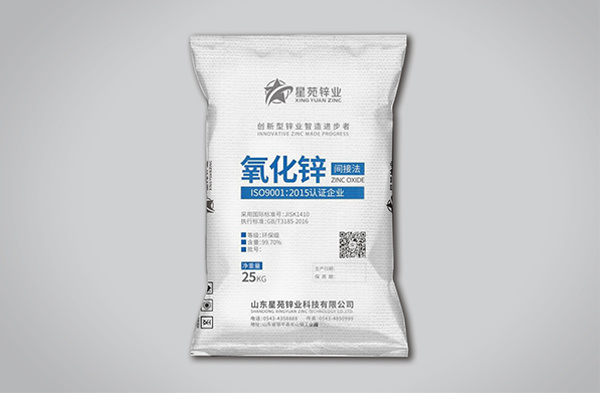
Zinc oxide in phosphating liquid It is a stable compound that provides broad-spectrum ultraviolet protection (UVA and UVB), also has antibacterial properties, and is a safe and effective ingredient in almost all sunscreen evaluations to date.
1. Physical Properties
Appearance and characteristics: White powder or hexagonal crystals. Tasteless, odorless. Turns yellow when heated, and turns white again upon cooling; sublimates when heated to 1800°C. The covering power is half that of titanium dioxide and zinc sulfide, and the coloring power is twice that of basic lead carbonate.
2. Chemical Properties
Zinc oxide in phosphating liquid is also a famous white pigment, commonly known as zinc white. Its advantage is that it does not turn black when encountering H2S gas, because ZnS is also white. When heated, it gradually changes from white to light yellow to lemon yellow, and the yellow color fades after cooling. This characteristic is utilized Zinc oxide in phosphating liquid in mixing paints or in thermometers to make color-changing paints or color-changing thermometers. Because ZnO has astringency and a certain bactericidal ability, it is often formulated into ointments for use in medicines, so ZnO can also be used as a catalyst.
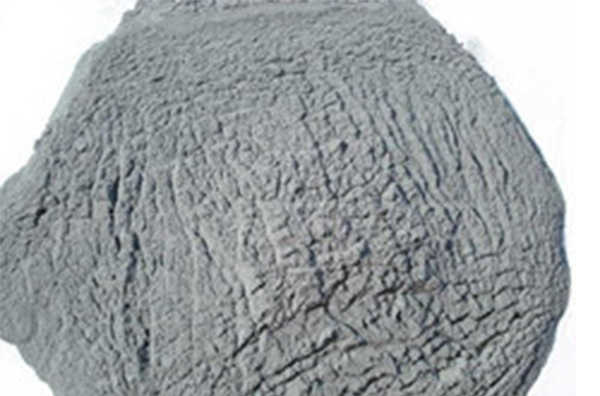
Xingyuan Zinc Technology CO., LTD.
Address: Shandong Zouping County Changshan Town Houhuai Village
General Manager:+8618763028888 (Sun Dongsheng)
Sales Department:+86-543-4358888
Fax:0543-4850999
E-mail:xingyuanchem@163.com
Website:www.sdxyxy.com


扫一扫查看官方网站