

Some knowledge points about zinc oxide, zinc oxide manufacturers tell you
2023-05-11
Zinc oxide manufacturers believe that zinc oxide, as a chemical additive, is widely used in the production of plastics, silicate products, synthetic rubber, lubricating oils, greases, adhesives, food, batteries, flame retardants, and other products. If the material field is considered a delicacy, zinc oxide undoubtedly plays an important role as "salt".
Zinc oxide manufacturers believe that zinc oxide, as a chemical additive, is widely used in the production of plastics, silicate products, synthetic rubber, lubricating oils, greases, adhesives, food, batteries, flame retardants, and other products. If the field of matter is considered a delicacy, zinc oxide undoubtedly plays the important role of "salt".
Zinc oxide, as an important semiconductor material, has attracted extensive attention from researchers for its electrical properties. Zinc oxide has a very wide band gap, with a band gap width as high as 3.37 eV at room temperature, and a very low carrier concentration, making it an insulating material. However, in practice, the prepared zinc oxide is usually an N-type semiconductor, rather than an insulating material. This is because impurities and defects may exist in the actual preparation process of zinc oxide materials, and these impurities will provide electrons, making the zinc oxide material a semiconductor.
Zinc oxide manufacturers believe that the resistivity of ZnO will also change with the concentration and type of gas adsorbed on the surface. Pure ZnO has a certain sensitivity to common gases. By forming composite metal oxides through composite materials, the parameters of sensor performance can be adjusted, which can be used to prepare sensitive electronic sensor devices with good results.
When not affected by external forces, zinc oxide material is electrically neutral; when external forces act on the zinc oxide material, zinc oxide will generate charges in the direction of force. The zinc oxide material generates a corresponding amount of charge according to the stress; the greater the stress, the greater the amount of charge. Using piezoelectric properties, piezoelectric nanogenerators can be constructed to power other nanodevices, and piezoelectric trigger logic electronic devices generated by pressure can be made for pressure trigger switches to optimize other electronic devices.
Zinc oxide manufacturers believe that the morphology of nano zinc oxide prepared by different preparation processes can be different, such as rod-like, sheet-like, and spherical. Their characteristics are also different. The preparation of nano zinc oxide usually includes gas phase deposition, precipitation, sol-gel method, and solid phase method. The corresponding preparation process can be selected according to different requirements.
Zinc oxide manufacturers believe that the gas phase deposition method uses gas as a carrier to bring zinc-containing substances (usually zinc salts or elemental zinc) into a high-temperature reaction environment, turning them into gas and causing a reaction. During the cooling process, nuclei are generated, grow, and develop to form nano zinc oxide. It is generally divided into chemical vapor deposition, laser-induced chemical vapor deposition, and spray pyrolysis. The precipitation method is to add a precipitant to a solution containing a zinc source to make the zinc in the solution form a corresponding precipitate, and then obtain the product through filtration, washing, and drying. The precipitation method is divided into direct precipitation and uniform precipitation. The sol-gel method is also known as the phase transition method. It uses zinc acid salt or alcoholate as the zinc source. First, a stable and transparent sol is obtained through hydrolysis and polycondensation, and then the solvent is used to polymerize it into a gel. After drying and heat treatment, nano zinc oxide is prepared.
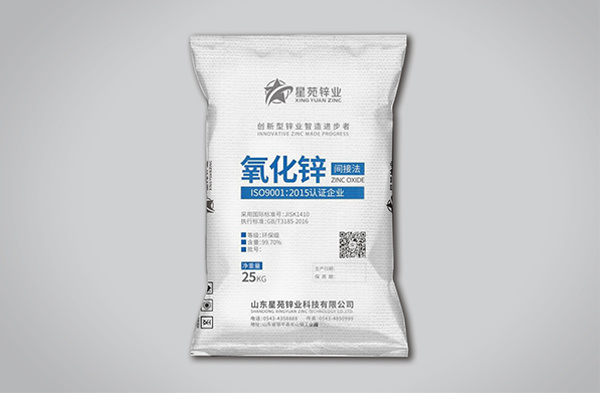
Xingyuan Zinc Technology CO., LTD.
Address: Shandong Zouping County Changshan Town Houhuai Village
General Manager:+8618763028888 (Sun Dongsheng)
Sales Department:+86-543-4358888
Fax:0543-4850999
E-mail:xingyuanchem@163.com
Website:www.sdxyxy.com


扫一扫查看官方网站